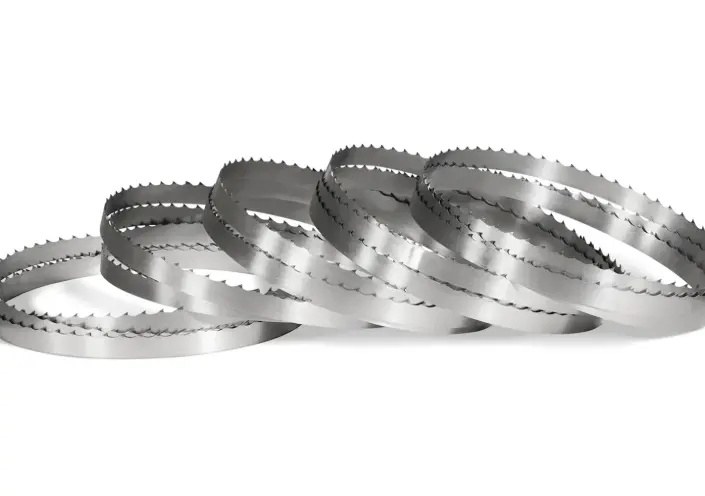
The best bandsaw blades for a sawmill are the blades that match the wood species, log condition, sawmill horsepower, feed speed, and cutting goal. There is no single blade that is perfect for every mill. A blade that cuts soft pine quickly may leave poor results in frozen oak. A blade that performs well in dense hardwood may cut too slowly in high-volume softwood production.
For most sawmill operators, the best band sawmill blades are durable, properly sized, easy to sharpen, stable in the cut, and matched to the material being sawn. The real test is not only how sharp the blade feels on the first log, but how consistently it cuts after hours of production.
Sawmill Blades Are Not Ordinary Bandsaw Blades
A sawmill blade works harder than a typical woodworking bandsaw blade. It must cut through full logs, bark, knots, moisture, dirt, frozen fibers, and changing grain direction. It also needs to remove a large amount of sawdust while staying straight through long cuts.
That is why sawmill blades are designed around several important features:
- Blade width
- Blade thickness
- Tooth spacing
- Hook angle
- Tooth set
- Steel quality
- Weld quality
- Gullet capacity
- Sharpening life
- Resistance to fatigue
When these features are matched correctly, the sawmill produces straighter boards, smoother surfaces, less waste, and fewer blade changes.
Best All-Around Blade: A General-Purpose Profile
For many portable sawmills, a general-purpose blade is the best starting point. This type of blade is usually designed for mixed sawing conditions, including softwoods, medium hardwoods, and common green logs.
A general-purpose blade often works well for:
- Pine
- Poplar
- Cedar
- Spruce
- Soft maple
- Walnut
- Cherry
- Mixed logs
- Small sawmill businesses
- Farm and homestead milling
If a sawyer cuts different wood species every week, a balanced blade profile is usually more practical than a specialized blade. It may not be the fastest in every material, but it reduces the need to change blades constantly.
Best Blades for Hardwood
Hardwood cutting puts more stress on the blade. Dense woods require a blade that can resist heat, maintain sharpness, and clear sawdust without wandering.
For hardwoods such as oak, ash, maple, beech, hickory, and walnut, sawmill operators often prefer blades with a tooth profile designed for stronger bite control and stable feed. In harder materials, too aggressive a tooth can overload the blade, while too fine a tooth can slow production and create heat.
Good hardwood band sawmill blades should provide:
- Stable tracking
- Strong tooth hardness
- Good gullet capacity
- Controlled hook angle
- Reliable set retention
- Clean surface finish
- Good resharpening performance
Hardwood mills should also pay close attention to feed rate. Pushing too fast can cause wavy cuts, tooth damage, or premature dulling.
Best Blades for Softwood
Softwood can often be cut faster, but it creates its own challenges. Resin, moisture, and fast feed rates can affect blade performance. A blade for softwood should clear sawdust efficiently and stay cool during long cuts.
Softwood sawing often benefits from a blade with enough gullet space to carry sawdust out of the kerf. If the gullet is too small, sawdust packs into the cut and forces the blade off line.
For pine, spruce, fir, cedar, and similar species, sawyers usually want a blade that supports smooth production speed without losing accuracy.
Best Blades for Frozen or Dirty Logs
Frozen logs and dirty logs are among the hardest conditions for sawmill blades. Frozen wood can behave more like a dense composite material, while bark with sand or grit can dull teeth quickly.
In these conditions, the best blade is not always the most aggressive one. A more controlled profile may last longer and reduce breakage.
For frozen, knotty, or dirty logs, buyers should consider:
- Stronger blade steel
- Lower or moderate hook angle
- Durable tooth tips
- Careful sharpening schedule
- Proper debarking or log cleaning
- Slower feed speed
- Correct blade tension
Even the best blade will wear quickly if logs are full of dirt, stones, or metal contamination.
Tooth Spacing: Why It Changes the Cut
Tooth spacing affects how fast the blade cuts and how well it removes sawdust. Wider spacing gives the gullet more room to carry sawdust, which can help in larger logs and higher-production cutting. Shorter spacing may work better for lower-horsepower sawmills, harder wood, or secondary processing.
A blade with poor tooth spacing for the job may cause:
- Wavy boards
- Slow cutting
- Excess heat
- Rough surfaces
- Packed sawdust
- Premature dulling
- Higher power demand
This is one of the most important details when comparing band sawmill blades.
Hook Angle: Aggressive vs. Controlled Cutting
Hook angle describes how far the tooth leans forward. A more aggressive hook can help the blade bite into the wood faster, but it can also make the blade harder to control in dense, frozen, or knotty logs.
A moderate hook angle is often useful for general sawmill work. Lower hook angles may help in very hard or difficult materials. Higher hook angles may suit faster production in softer wood when the sawmill has enough power and the operator can maintain proper feed control.
The right hook angle should match both the wood and the machine.
Blade Width and Thickness
Blade width affects stability. Wider blades can provide better beam strength and straighter cuts, especially on higher-horsepower sawmills. Narrower blades may be suitable for smaller portable mills or lighter-duty cutting.
Blade thickness also matters. Thicker blades may handle higher power and feed pressure, but they require proper wheel size, tension, and machine compatibility. A blade that is too thick for the sawmill can fatigue quickly.
Before buying, always confirm the blade length, width, thickness, and wheel compatibility required by the sawmill.
Carbon Steel, Alloy Steel, or Bi-Metal?
Material choice affects blade life, sharpening, and cost.
Carbon steel blades are common and economical. They are suitable for many portable sawmills and general sawing tasks.
Alloy steel blades may offer better fatigue resistance, longer sharpening life, and improved durability in demanding work.
Bi-metal blades can provide higher tooth wear resistance, but they may cost more and are usually selected for specific production needs.
The best value is not always the cheapest blade. A blade that cuts longer between sharpenings may reduce downtime and lower cost per board foot.
Signs You Are Using the Wrong Blade
A sawmill often tells the operator when the blade is wrong. Watch for these signs:
- Boards come out wavy.
- The blade dives or climbs in the cut.
- Feed speed drops suddenly.
- The cut surface becomes rough.
- The blade heats up quickly.
- Teeth dull after only a few logs.
- Sawdust becomes powdery instead of chip-like.
- The blade breaks before normal service life.
- Sharpening does not restore performance.
These problems may come from blade choice, but they can also come from tension, guide alignment, wheel condition, feed speed, or dirty logs.
Practical Buying Advice
For small sawmills, start with a reliable general-purpose blade and then add specialized blades as you learn your wood supply. For hardwood-heavy production, choose a blade profile designed for dense material. For softwood production, prioritize sawdust removal and feed efficiency. For frozen or dirty logs, focus on durability and control.
A good sawmill blade program usually includes:
- Several general-purpose blades
- A hardwood blade option
- A frozen or difficult-log option
- A sharpening schedule
- Proper blade storage
- Regular tooth setting checks
- Clean log handling practices
This approach gives the operator flexibility instead of relying on one blade for every job.
Conclusion
The best bandsaw blades for a sawmill depend on the wood species, log condition, sawmill power, blade size, tooth spacing, hook angle, and production goal. A general-purpose blade is often the best starting point, while hardwood, softwood, frozen log, and high-production operations may benefit from more specialized profiles.
High-quality band sawmill blades should cut straight, hold sharpness, clear sawdust efficiently, resist fatigue, and match the sawmill’s specifications. Choosing the right blade improves lumber quality, reduces waste, lowers downtime, and helps the sawmill run more profitably.
For sawmill blade product information, visit YF COO Saw.
Post time: 08-19-2026