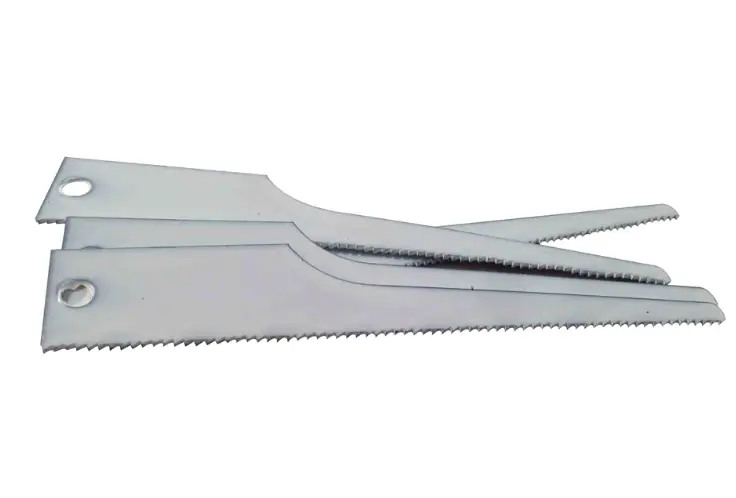
Air saw blades are small cutting blades designed for use with pneumatic air saws. An air saw is powered by compressed air and moves the blade rapidly back and forth to cut materials such as sheet metal, plastic, fiberglass, rubber, aluminum, thin steel, exhaust pipe, auto body panels, and light fabrication materials.
Compared with large power saw blades, air saw blades are usually narrow, lightweight, and made for detailed cutting in tight spaces. They are commonly used in automotive repair, metalworking, maintenance shops, aircraft repair, HVAC work, plumbing, and general industrial cutting tasks.
How Air Saw Blades Work
Air saw blades work through reciprocating motion. The pneumatic saw converts compressed air into rapid blade movement. As the blade moves forward and backward, its teeth remove small chips from the material.
Because the blade is narrow, it can make curved cuts, short straight cuts, trimming cuts, and access cuts where larger saws cannot fit. This makes air saws especially useful for repair work and precision cutting.
Common Uses of Air Saw Blades
Air saw blades are used in many practical applications, including:
- Cutting automotive body panels
- Trimming thin sheet metal
- Cutting fiberglass parts
- Removing damaged sections
- Cutting plastic panels
- Trimming rubber materials
- Cutting exhaust pipe
- Making access openings
- Repairing HVAC ductwork
- Light fabrication and maintenance
In auto body shops, air saws are valued because they provide good control and can cut panels with less bulk than larger electric cutting tools.
Main Types of Air Saw Blades
Metal Cutting Blades
Metal cutting air saw blades usually have fine teeth and are designed for thin steel, aluminum, copper, brass, and sheet metal. Fine tooth spacing helps reduce grabbing and produces a cleaner cut in hard materials.
Plastic Cutting Blades
Plastic cutting blades may use a tooth pattern that reduces melting, chipping, or rough edges. Proper speed and light pressure are important when cutting plastic.
Fiberglass Cutting Blades
Fiberglass can be abrasive, so blade durability matters. A suitable blade helps reduce splintering and improves cutting control.
General-Purpose Blades
General-purpose blades are used for mixed workshop tasks. They may cut light metal, plastic, and other thin materials, but they may not perform as well as specialized blades in demanding applications.
Tooth Count Matters
Tooth count is one of the most important factors when choosing air saw blades. It is usually measured in teeth per inch, or TPI.
A higher TPI blade has more teeth and is better for thin metal and cleaner cuts. A lower TPI blade has fewer teeth and can cut softer or thicker materials more aggressively.
As a simple rule:
- Fine-tooth blades are better for thin metal.
- Medium-tooth blades are useful for general work.
- Coarser blades may suit softer or thicker materials.
Using the wrong tooth count can cause rough cuts, vibration, blade breakage, or slow cutting.
Blade Material and Durability
Air saw blades are commonly made from high-carbon steel, high-speed steel, bi-metal materials, or other hardened blade steels. The best choice depends on the material being cut and the expected workload.
Bi-metal blades are often preferred for demanding cutting because they combine flexibility with wear-resistant teeth. This can help reduce breakage and improve service life.
How to Choose the Right Air Saw Blade
Before selecting a blade, consider:
- Material type
- Material thickness
- Required cut quality
- Tooth count
- Blade length
- Blade width
- Shank compatibility
- Saw stroke length
- Cutting speed
- Blade flexibility
- Expected blade life
The blade must fit the air saw correctly. A blade with the wrong shank or length may not clamp securely or may break during operation.
Air Saw Blades vs. Hacksaw Blades
Air saw blades and hacksaw blades may look similar in some cases, but they are not always interchangeable. Air saw blades are designed for rapid reciprocating motion in a pneumatic tool. They must handle vibration, clamping force, and high-speed cutting.
A standard hand hacksaw blade may not fit properly or may fail quickly in an air saw. Always use blades designed for the tool.
Tips for Better Cutting Performance
To get better results with air saw blades, operators should:
- Choose the correct TPI for the material.
- Keep the blade straight during cutting.
- Avoid forcing the tool.
- Let the blade do the work.
- Support the workpiece firmly.
- Use cutting fluid when suitable for metal.
- Replace dull or damaged blades.
- Keep the air saw properly lubricated.
- Check air pressure according to the tool instructions.
A sharp blade cuts faster, creates less heat, and reduces stress on the air saw.
Safety Considerations
Air saws are compact, but they can still be dangerous if used carelessly. Operators should wear eye protection, gloves, hearing protection, and appropriate respiratory protection when cutting materials that create dust or particles.
Before cutting, check that the blade is securely installed. Keep hands away from the cutting path, secure loose clothing, and disconnect the air supply before changing blades.
Conclusion
Air saw blades are specialized reciprocating blades used with pneumatic air saws for cutting metal, plastic, fiberglass, rubber, and other light materials. They are especially useful for auto body repair, maintenance work, fabrication, and cutting in tight spaces.
The right air saw blades should match the material, thickness, tooth count, blade length, and air saw model. Choosing the correct blade improves cutting speed, accuracy, blade life, and operator safety.
For saw blade product information, visit YF COO Saw.
Post time: 08-11-2026