Welcome to the world of professional gardening and tool procurement. I am Chen Wei, representing Shandong Shunkun Hardware Tools Co., Ltd., a dedicated manufacturer of high-quality hand saws and garden tools in China. If you are a buyer like Brian Miller, looking for durability, precision, and value for your retail chain or distribution network, you know that the right tool makes all the difference. Today, we are going to dive deep into the art and science of selecting the essential pruning tools for your inventory or personal kit.
Why is this article worth reading? Because tree pruning is not just about chopping off branches. It is a delicate surgical procedure for plants. Using the wrong pruning tool can damage a healthy tree, introduce disease, and exhaust the worker. Whether you are looking to prune fruit trees for a better harvest or manage a landscape of mature oaks, understanding the nuances of a pruning saw, loppers, and the humble pruner is vital. We will explore the materials, designs, and specific applications that separate a mediocre tool from a professional one.
Why is Selecting the Best Tree Pruner Critical for Tree Health?
When it comes to pruning, many people make the mistake of thinking any sharp object will do. However, the health of the tree depends heavily on the quality of the cut. A clean cut allows the tree to heal quickly, sealing off the wound from bacteria, fungi, and pests. If you use a dull or inappropriate tool, you might crush the stem or tear the bark. This damage can be detrimental to the tree, leading to rot and long-term decline.
Selecting the best tree pruner is about matching the tool to the plant's biology. For example, when you prune a delicate rose bush or a young fruit tree, you need a tool that slices cleanly like a pair of scissors. If you are handling heavy pruning of dead wood, you need a blade that can withstand the pressure without snapping. As a manufacturer, we use high-quality SK-5 steel in our blades because it holds a sharp edge longer, ensuring that every cut is a clean cut. This attention to detail in the pruning tool protects your investment in the landscape.
Furthermore, the right tool reduces the effort required by the user. Pruning jobs can be repetitive and tiring. A well-designed tool utilizes leverage and sharp geometry to do the work for you. This means less fatigue for the gardener and a more consistent result for the tree care routine.
What Are the Different Types of Pruning Tools Available?
The market is flooded with different pruning tools, and it can be overwhelming to choose the best one for your needs. Generally, tools for pruning fall into a few specific categories based on the diameter of the wood they are designed to cut. Understanding these categories is the first step in building a comprehensive tool selection.
The primary categories include:
- Hand Pruners (Pruning Shears): These are for small twigs and stems, usually up to 3/4 inch thick. They are the most common pruning tool.
- Loppers: These have long handles and are used for branches up to 2 inches thick. They provide the leverage needed for harder wood.
- Pruning Saws: These are essential for any branch thicker than 2 inches. Pruning saws come in various shapes and sizes, including folding saws and fixed-blade saws.
- Pole Saws/Pruners: These are essentially saws or shears mounted on a long, extendable pole for reaching high branches without a ladder.
Each of these tools for pruning serves a specific purpose. You wouldn't use a hand pruner on a thick oak limb, and you wouldn't use a massive pruning saw to snip a flower deadhead. Having the right pruning tools in your arsenal ensures that you can handle any types of pruning or tree trimming scenarios that arise.
When Should You Use a Hand Pruner Versus Pruning Shears?
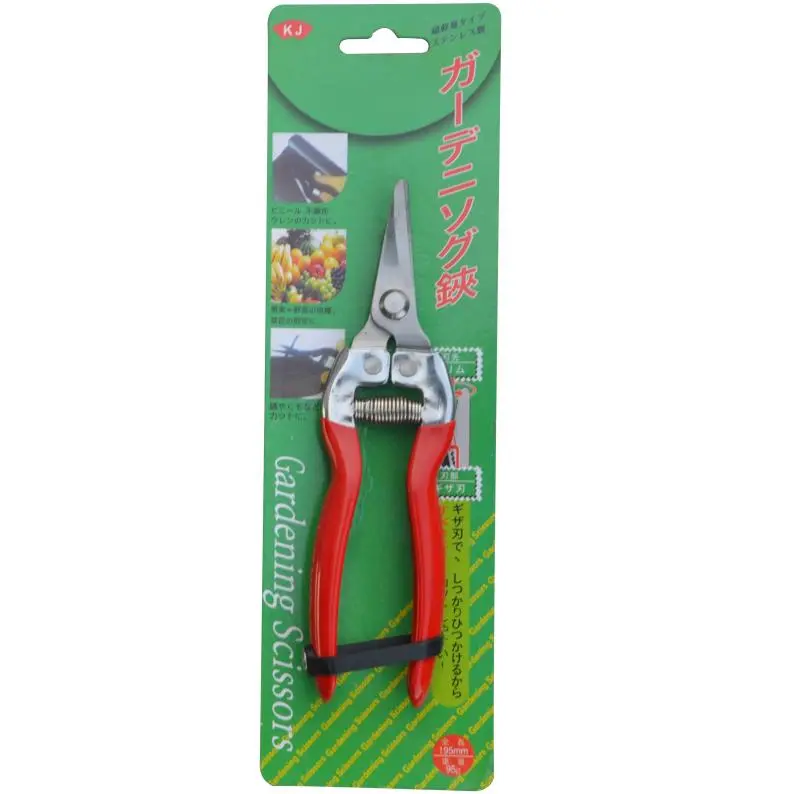
The terms "hand pruner" and "pruning shears" are often used interchangeably, but they refer to the small, one-handed tools that are the workhorse of any gardener. These are perfect for pruning small branches, shaping shrubs, and deadheading flowers. When selecting the best tool in this category, you generally have to choose between bypass pruners and anvil pruners.
Bypass pruners work like scissors. Two curved blades pass by each other to make a slice. This type is best for cutting live, green wood because it makes a very clean cut without crushing the plant tissue. For pruning tasks involving young fruit trees or green stems, a bypass pruner is the standard choice.
Anvil pruners, on the other hand, feature a single straight blade that closes down onto a flat edge (the anvil). This action is more like a knife cutting on a cutting board. Anvil pruners are powerful but tend to crush the stem slightly. Therefore, they are better suited for cutting dead wood or dry branches where crushing tissue isn't a concern. For general garden pruning, a high-quality bypass hand pruner with an ergonomic handle is usually the first tool you should reach for.
Why Are Loppers the Best Tool for Cutting Medium-Sized Branches?
When a branch is too thick for your hand pruner but not quite big enough to warrant breaking out the chainsaw, loppers are your best friend. Loppers are essentially heavy-duty pruners with long handles. These long handles provide two massive benefits: reach and leverage. The leverage allows you to cut through branches up to 2 inches in diameter with relatively little physical strength.
Loppers are especially useful for pruning dense bushes and fruit trees where you need to reach deep into the canopy. Just like hand pruners, they come in bypass and anvil styles. For maintaining a healthy tree, bypass loppers are preferred for live wood. The long handles also allow you to prune lower branches without bending over or higher branches without stretching too much.
At Shandong Shunkun, we ensure our loppers are built with lightweight yet strong materials. Heavy tools cause fatigue. By using strong tubular steel or aluminum for the handles and high-carbon steel for the blade, we provide a tool that makes heavy pruning feel much lighter. If you have a lot of pruning to do on established bushes, loppers are indispensable.
How to Choose the Best Pruning Saw for Heavy-Duty Pruning Tasks?
When the wood gets tough, you need a saw. A pruning saw is designed specifically for cutting live and dead wood aggressively yet cleanly. Unlike a carpenter's saw, which is designed for dry lumber, a pruning saw has teeth designed to clear green, wet sawdust (sap) so the blade doesn't get stuck. When you need to remove a large limb, a pruning saw is the tool for the job.
To choose the right saw, look at the teeth. Modern pruning saws use a "tri-edge" or three-sided tooth design. This allows the saw to cut on both the push and pull strokes, or more commonly, aggressively on the pull stroke. This is much more efficient than traditional saws.
Also, consider portability. A folding saw is incredibly popular because it is safe to carry in a pocket or belt sheath. A folding pruning saw is excellent for intermittent use. However, for professional arborists or heavy pruning jobs, a fixed-blade pruning saw in a scabbard is often preferred for its rigidity and immediate readiness. Whether you choose a folding saw or a fixed one, ensure the blade is made of high-quality steel like SK-5 to stay sharp.
Curved Blade vs. Straight Blade: Which Pruning Saw Blade Is Right for You?
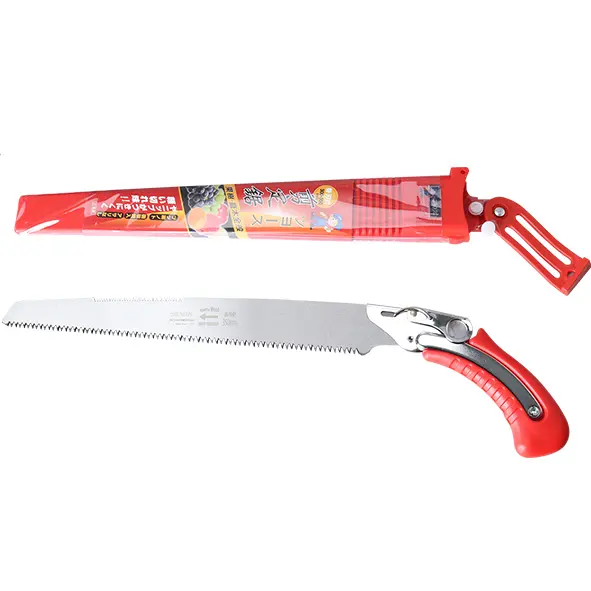
You will notice that pruning saw blades come in two main shapes: curved and straight. This isn't just for aesthetics; each shape is designed for specific cutting situations.
A curved blade pruning saw is ideal for heavy-duty cutting, especially overhead. The curve helps the blade dig into the branch. When you pull the saw back, the curve naturally hooks into the wood, applying more force with less effort from your arm. This makes it the best tree saw for removing larger limbs or working at shoulder height and above.
A straight blade pruning saw, conversely, offers more precision. It is excellent for working in between tight crotches of branches or performing detailed pruning tasks where you don't want to accidentally nick an adjacent branch. Straight blades are often favored by professionals for fruit tree pruning where careful selection of the branch without damaging the spur is critical. Understanding these differences helps you choose the right tool for your specific inventory or garden needs.
When Is a Pole Saw or Pole Pruner Necessary for High-Reach Jobs?
Safety should always be a priority in tree pruning. Climbing ladders with sharp tools can be dangerous. This is where the pole saw and pole pruner come into play. These tools allow you to prune trees while keeping your feet firmly on the ground.
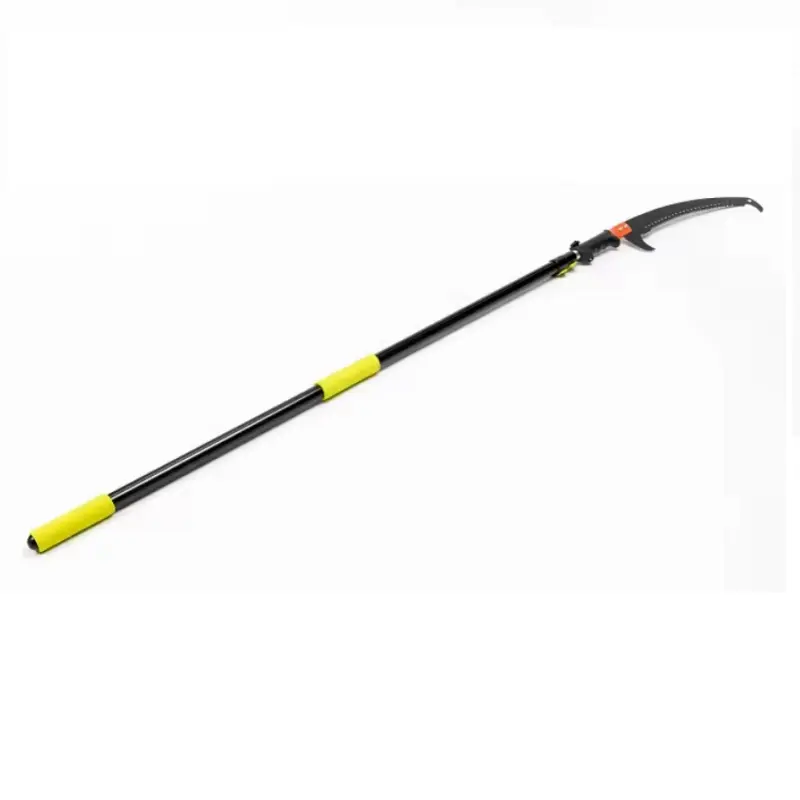
A pole pruner usually consists of a bypass shear head operated by a rope and pulley system. It is great for snipping water sprouts and small branches high up in the canopy. For larger limbs, a pole saw—essentially a curved blade mounted on a stick—is used.
Modern pole saws are often telescopic, allowing you to adjust the height. When using a pole saw, the curved blade is particularly useful because it helps keep the saw in the cut groove, preventing it from slipping out when you are extending your reach. This tool is essential pruning tools for maintaining the height of a mature tree or clearing branches away from structures. It turns a dangerous climb into a safe, routine task.
How to Prune Fruit Trees Effectively to Maximize Yield?
Fruit tree pruning is a specialized skill that relies heavily on using the right tool. The goal here isn't just to shorten the tree, but to open up the canopy to sunlight and air circulation, which reduces disease and ripens fruit. Whether you are tending to an apple tree or a peach tree, the principles are similar.
You want to start by removing the "3 Ds": Dead, Damaged, and Diseased wood. A sharp hand pruner or folding saw is perfect for this. Next, you remove water sprouts (vertical shoots) that suck energy from the tree. Because fruit wood can be delicate, using a pruner that makes a clean cut is non-negotiable. A ragged cut on a fruit tree can introduce rot that destroys the harvest.
For young fruit trees, training cuts determine the future shape of the tree. Here, precision is key. A straight blade saw or high-quality shears allow you to cut exactly above a bud, directing the new growth outward. Proper fruit tree care through regular pruning ensures a bountiful harvest and a strong structure that can support the weight of the fruit.
Why Is an Ergonomic Handle Essential for Long-Term Use?
If you are a professional landscaper or a serious gardener, you might be making hundreds of cuts in a single day. This repetitive motion can lead to hand strain, blisters, and conditions like carpal tunnel syndrome. This is why an ergonomic handle is not a luxury; it is a necessity.
At Shunkun, we design our handles using TPR (Thermoplastic Rubber) materials that are non-slip and comfortable to grip. A good handle should fit the natural curve of your hand. For pruning saws, a pistol-grip style handle allows you to apply force on the pull stroke without twisting your wrist. For hand pruners, the handle should compress easily and spring back open on its own.
When selecting the best tools for resale or use, always test the grip. A tool that feels good in the hand will be used more often and with better results. Comfort leads to better control, and better control leads to safer, more precise pruning.
How Do You Maintain Your Tools to Ensure a Clean Cut Every Time?
Even the best tools for pruning need maintenance. A dull blade crushes wood, and a dirty blade spreads disease. To keep your tools in top shape, follow a simple routine.
- Clean: After every use, wipe off sap and debris. Sap can harden and gum up the pivot point.
- Sharpen: Use a diamond file or whetstone to sharpen the cutting edge of your pruner or loppers. For pruning saw blades, which have complex teeth, it is often easier to replace the blade, though some can be sharpened with specialized files.
- Oil: Apply a light coat of oil to the blade and pivot point to prevent rust. Our SK-5 carbon steel blade is resistant, but oil ensures longevity.
By keeping your equipment sharp, you ensure a clean cut every time you prune. This simple act of maintenance extends the life of the tool and protects the health of the tree.
Key Takeaways
To summarize, choosing the right pruning tools is essential for effective gardening and inventory management. Here are the main points to remember:
- Match the Tool to the Job: Use hand pruners for small stems (< 3/4"), loppers for medium branches (< 2"), and pruning saws for large limbs (> 2").
- Blade Quality Matters: Look for high-carbon SK-5 steel blades for durability and sharpness.
- Curve vs. Straight: Use curved blades for heavy, overhead cutting and straight blades for precision work.
- Bypass is Best for Live Wood: Bypass pruners and loppers make cleaner cuts on green wood than anvil styles.
- Safety First: Use pole saws for high branches to avoid dangerous ladder climbing.
- Ergonomics: Choose tools with non-slip, comfortable handles to reduce fatigue during intensive pruning sessions.
- Maintenance: Clean, sharpen, and oil your tools regularly to ensure they perform well and last for years.
Post time: 12-18-2025