Keeping a landscape healthy demands the right equipment. When you prune branches, making clean cuts ensures your plants thrive. This guide covers how to select the best trimming tools, why an ergonomic grip matters, and how advanced cutting action powers through thick wood. Read on to discover how upgrading your gear can reduce arm fatigue and boost productivity for your retail buyers or personal projects.
How Does a Gardener Choose the Right Pruning Saw for the Garden?
Every gardener faces the challenge of keeping their garden tidy. However, the best pruning saw will depend entirely on the specific plants you manage. You need a reliable saw. You want a tool that can cut wood quickly and safely. If you just have a little pruning to manage on a weekend, a simple hand saw might be enough. But for heavy, daily work, you must choose the right tool carefully to avoid frustration.
You might wonder if you need a folding saw or a fixed tool. A good rule of thumb is to match the tool to the wood type. Small branches are usually easy to manage. But larger branches demand a specialized saw blade. Wholesale buyers and distributors always look for durability. They know their customers need tools that last. The durability of a tool often starts with the blade.
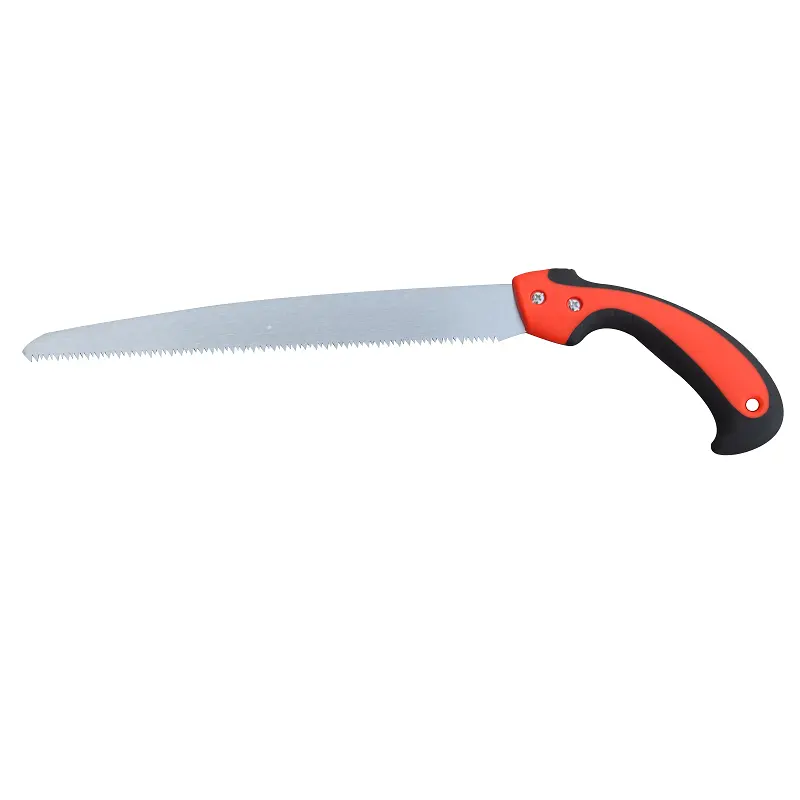
A professional bent handle pruning saw offers excellent leverage. This design is highly favored by professionals. The curve naturally follows the arc of your arm as you prune. This means less wasted motion. When you stock tools for a hardware store, offering a variety of shapes is smart. Different users have different preferences. Let's look at how handle design impacts performance.
Why Do the Best Pruning Saws Need an Ergonomic Grip?
An ergonomic handle changes everything about yard work. When you prune all day, hand fatigue becomes a real and painful problem. The best pruning saws feature a grip that is designed to reduce physical strain. A proper ergonomic grip feels good in the hand. It distributes the pressure evenly across your palm.
If your hands are sweaty or wet from morning dew, a bare plastic handle slips easily. A nonslip coating on an ergonomic handle is absolutely crucial. It keeps the saw from accidentally slipping out of your grasp. This significantly lowers the risk of injury. A strong grip means you are always in control.
A comfortable handle lets you execute push and pull strokes with maximum power. It minimizes arm fatigue over long shifts. Whether you use a straight blade or a curved blade, the grip anchors the tool box item securely in your hand. Manufacturers often use TPR (Thermoplastic Rubber) because it provides excellent nonslip properties. This material adds tremendous durability to the saw.
What Makes a Saw Blade Produce Clean Cuts on Trees and Shrubs?
The secret to clean cuts lies entirely in the teeth. A modern steel blade uses a sophisticated triple-ground design. This specialized cutting action makes smooth cuts effortlessly. It slices cleanly through the fibers, which helps avoid disease from entering the shrub or tree. Jagged wounds invite pests.
Many high-end impulse-hardened pruning saw blades stay sharper for a much longer time. The rapid heat treatment makes the high-carbon steel incredibly tough. Clean cuts heal much faster than jagged, torn bark. When you care for trees, protecting their health is the top priority. A sharp blade is your best defense against causing accidental damage to trees and shrubs.
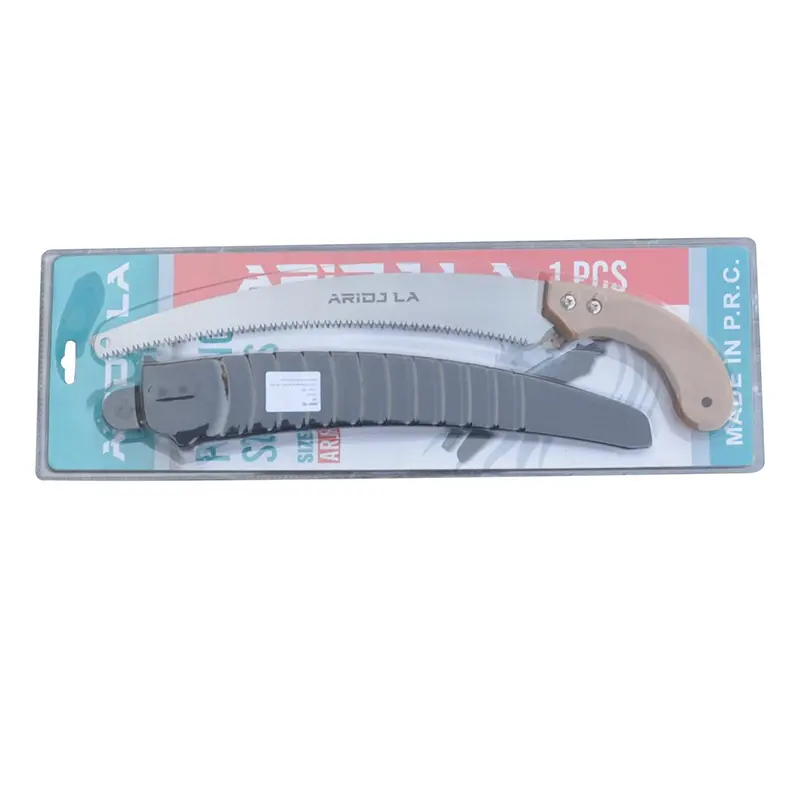
A curved pruning saw bites into the wood more easily than a flat one. The curve keeps the blade from sticking in the groove as you work. It aggressively cuts on the pull stroke, grabbing the branch being cut firmly. This design is highly efficient. It clears sawdust out of the cut path, ensuring the saw cuts smoothly without jamming.
How Do You Prune Thicker Branches Without Hand Fatigue?
Thicker branches require more leverage and a smarter approach. A saw designed to cut through thick branches needs an aggressive tooth pattern. A high-quality carbon steel blade cuts fast. This makes your pruning easier and saves you precious time. You do not want to spend ten minutes on one single branch.
Using the pull stroke technique saves a lot of energy. Most high-end Japanese-style saws work this way, unlike a traditional Western tool that cuts on the push. Pulling uses your back and shoulder muscles, not just your forearm. This dramatically reduces hand fatigue. It is a smarter way to work in the garden. For extreme jobs, you might prefer a waist saw with a replaceable saw blade.
If the branch is very thick, perhaps over three inches, you might need a heavier tool. Ensure the saw blade has deep gullets between the teeth to clear out sawdust quickly. This prevents binding. A bound blade stops your rhythm. Keep your motions steady and let the sharp teeth do the hard work for you.
When Should You Use Pruning Shears vs. a Hand Saw?
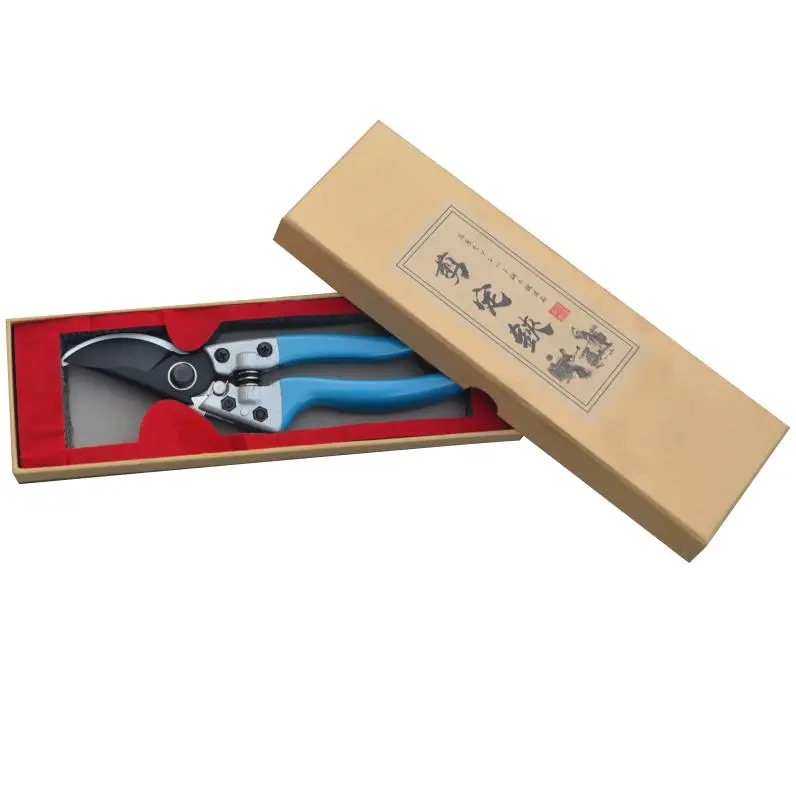
Different trimming tools have very specific jobs in the yard. Pruning shears, sometimes called secateurs, handle green stems under an inch thick. They are perfect for deadheading flowers or shaping a small shrub. They operate like strong scissors and make very fast, precise snips.
For mature branches without soft green tissue, grab a hand saw. A saw cuts cleanly through dense, woody material. Loppers fit nicely in between these two tools, but they can crush the wood if pushed too hard. Crushing damages the plant. Always choose the cutting tool that matches the diameter of the branch. For the best results, use durable gardening shears for the light work.
A well-equipped landscaper carries both types of tools. Use the shears for quick, easy snips. Use a saw for larger branches. This combination handles almost all garden maintenance tasks efficiently. You will save time and protect the health of your plants by using the correct implement for every job.
Is a Pole Pruner Better Than a Hand Tool for Tall Trees?
When dealing with tall trees, safety is always paramount. A pole pruner allows you to reach high branches without a ladder. This is a vital safety feature. Falling from heights is a major hazard in tree maintenance. Keeping your feet firmly planted on the earth protects you from serious accidents.
An extendable pole saw easily reaches overhead branches safely. You remain on the ground while the sharp saw blade does the heavy lifting up high. These long tools are designed to be lightweight but rigid. They provide the reach you need without the wobble that makes cutting dangerous. A pole saw is essential for any serious property manager performing tree trimming.
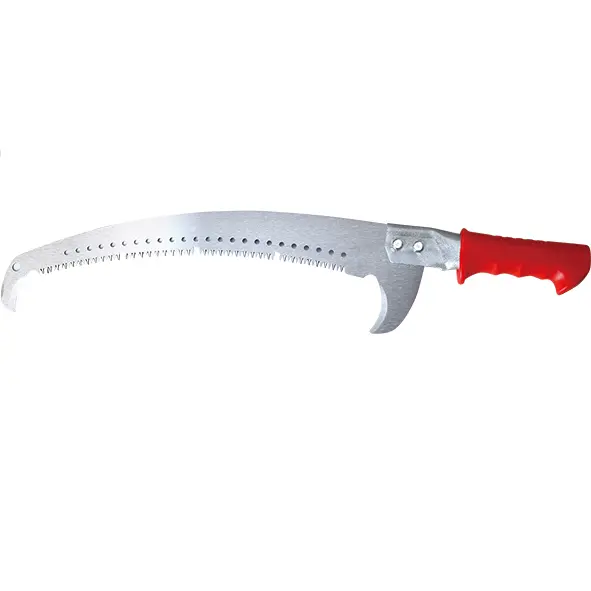
While hand tools are absolutely great for chest-height work, a pole saw is necessary for tall branches. It is a highly specialized garden implement. When you need to cut limbs that are ten feet in the air, do not risk climbing. Use a pole tool to bring the cutting edge to the wood safely and effectively.
Why Do Trimming Tools Need Secure Locking Mechanisms?
Safety should always come first when handling sharp objects. A folding pruning saw needs a reliable lock. Secure locking mechanisms keep the blade attached and stable during rigorous use. A loose blade is a massive danger to the user.
If a lock fails, the sharp blade can snap shut on your fingers. You must ensure the lock holds the blade firmly open during the intense cutting action. A strong secure locking pin prevents the saw from accidentally closing while you are pulling hard. This feature is non-negotiable for professional-grade equipment. It is what separates cheap tools from reliable ones.
This critical feature stops the folding tool from becoming a hazard. A folding saw is wonderfully easy to carry in a pocket or pouch, but the lock is what makes it a truly safe hand tool. Always test the lock before you begin to prune. Listen for the distinct click that tells you it is secure. Ahigh-quality folding saw will always have a robust locking system.
How Does Blade Length Impact Your Pruning Easier and Faster?
The blade length directly determines how fast you can cut through timber. A long blade means fewer strokes are needed to finish the job. It significantly speeds up your tree trimming tasks. When you are processing dozens of limbs, those saved seconds add up to hours of saved labor.
For very thick branches, you need a saw blade that is noticeably longer than the branch's diameter. This allows for a full, sweeping pull stroke. If the blade is too short, it will constantly slip out of the cut. This is frustrating and dangerous. A proper length gives you a smooth rhythm. It maximizes the efficiency of the triple-ground teeth.
However, straight saws with short blades are sometimes much better for tight spaces. You must constantly balance the blade length with the environment you are working in. A short, straight blade fits nicely into dense bushes where a long, curved blade might get tangled. Choose the size that fits the specific space.
Can a High-Quality Steel Blade Prevent Rust and Sap Build-Up?
Sticky sap is the natural enemy of any saw. It acts exactly like glue inside the cut. A premium rust-resistant coating on a high-carbon steel blade really helps. This coating prevents the sticky resins from bonding to the metal. It keeps the surface slick and fast.
When you prune a highly sappy pine tree, the blade gets sticky very fast. A good non-stick coating makes it much cleaner. It also actively stops rust from forming after a long, damp day in the garden. Moisture and sap are a bad combination for raw steel. A coated blade resists both of these elements brilliantly.
You still need to maintain it, of course. Wipe the sap off regularly. A cleaner blade ensures accurate cuts and maintains excellent blade quality over time. If you leave sap on the metal, it will eventually degrade the steel and attract moisture. A quick wipe down is all it takes to preserve the tool.
What Are the Top Tips for a Landscaper to Maintain Pruning Saw Blades?
A professional landscaper knows that daily tool care is completely essential. To keep the blade in good shape, clean it at the end of every single shift. Use a specialized solvent or rubbing alcohol to dissolve the stubborn sap. Do not scrape it with another metal object, as this will damage the fine teeth.
Always store your saw in a dry, safe place. Ambient moisture naturally causes rust. A little drop of machine oil rubbed into the steel helps keep the blade in good condition during storage. It forms a microscopic barrier against the humid air. Proper storage in a dry tool box extends the life of your equipment significantly.
Some blades are very easy to replace when they finally wear out. Others you must carefully sharpen. But remember, impulse-hardened teeth are often too hard to sharpen with a standard hand file. They are designed to stay sharper for a very long time, but once they dull, it is usually better to buy a replacement blade. Many gardeners prefer replaceable blades because they guarantee factory-fresh sharpness every single season.
Summary of the Best Pruning Saws and Techniques
- Always select the proper tool: Match your trimming tools to the job. Use pruning shears for small twigs and a dedicated hand saw for thicker branches.
- Prioritize comfort and safety: Choose an ergonomic handle with a nonslip grip to reduce arm fatigue and keep the tool firmly in your hand, even when wet.
- Look for advanced steel: A high-quality SK-5 carbon steel blade with impulse-hardened, triple-ground teeth provides the smoothest cutting action and unmatched durability.
- Understand blade shapes: A curved blade bites into wood aggressively on the pull stroke, while a straight blade offers precise control in tight, crowded spaces.
- Maintain your gear: Clean sap off your saw blade regularly and apply a light coat of oil to prevent rust. This simple habit keeps your tools performing like new.
- Value safety features: Always ensure your folding pruning saw has secure locking mechanisms to prevent accidental closures and potential injuries.
- Know when to upgrade: For tall trees, invest in an extendable pole pruner to safely reach high branches without relying on an unstable ladder.
Finding the best pruning saws doesn't have to be complicated. By focusing on ergonomic design, high-quality materials, and the correct blade length, you can make yard work more efficient and enjoyable. Whether you are a wholesale buyer outfitting a retail chain or a dedicated gardener managing your own property, investing in premium tools like those similar to the corona razortooth or our own Shunkun series ensures that every cut you make is clean, fast, and safe. Proper tools not only protect your physical health by reducing strain but also safeguard the vitality of the trees and shrubs you care for so deeply, unlike corona’s competitors that may fall short in durability.
Post time: 03-06-2026