Let's break down the exciting world of cutting tools. This article explores how to pick the right equipment for outdoor adventures or heavy yard duty. You will learn about different models, safety tips, and what makes a great tool stand out. It is worth reading if you want to make smart buying choices and avoid cheap gear that breaks when you need it most.
What makes a folding saw the perfect companion for camp?
When you head out into the wild, you need gear that works hard but takes up little space. A great folding saw is exactly that. It lets you fold the sharp edge away safely. This makes it a top pick for any camp setting. If you want to process wood fast, you need a reliable saw. Many people love how easy it is to carry. You just toss it in your bag and go. It is much safer than carrying a fixed blade saw without a proper cover.
On backpacking trips, every single ounce matters. You don't want to carry heavy, clunky tools. A lightweight tool is a game changer. The best folding saws weigh very little but cut like champions. Brands like silky and bahco have made this style famous. Their tools are known for being very sharp. For example, a laplander tool is legendary among hikers. It has a tough tooth pattern that bites into green and dry wood smoothly. It cuts fast and rarely gets stuck.
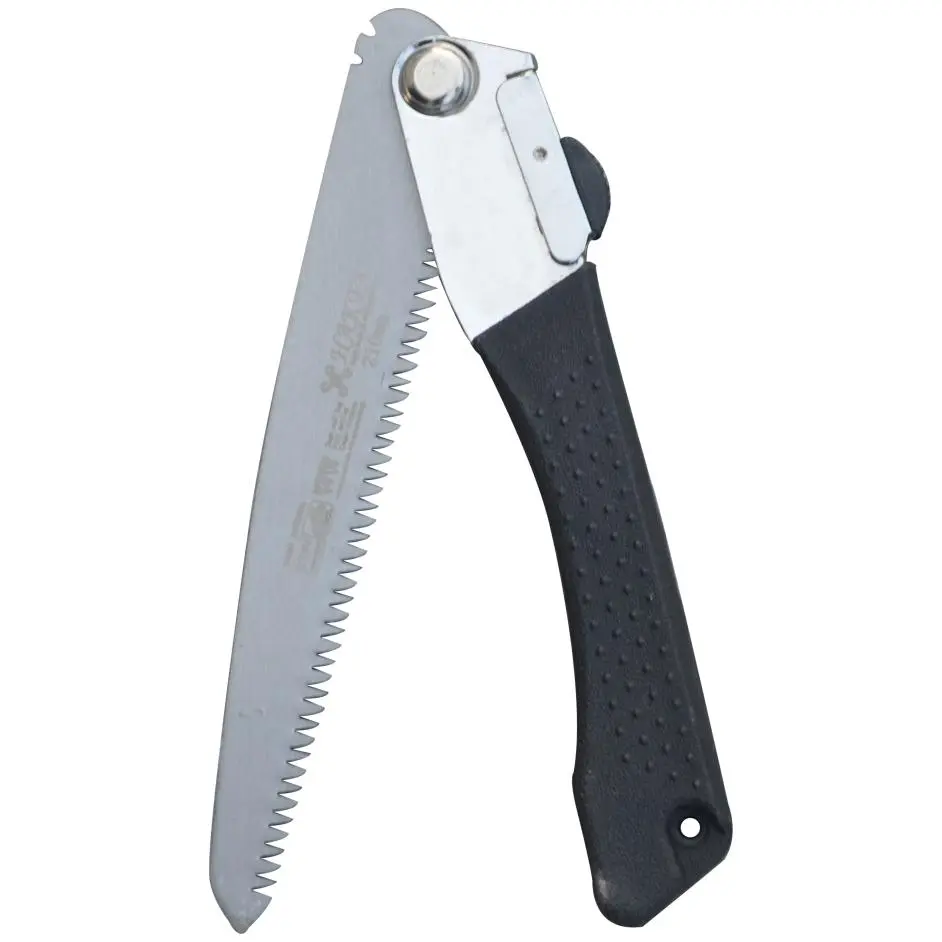
When you set up your tent, you quickly realize the work involved. You must gather fuel for the fire. A collapsible tool is ideal here. If you need to cut a branch for roasting marshmallows or build a shelter, you just unfold the metal. The blade locks firmly into place. This lock keeps your fingers safe. Once the job is done, you fold it back up. It is the smartest way to handle chores.
Folding saw vs fixed blade saw: Which offers better durability?
When we put the saw vs fixed blade saw debate on the table, it always comes down to strength. A solid tool is basically one piece of metal attached to a handle. Because it does not fold, it has no moving parts. This gives it incredible stiffness. When you want to do real work on a farm or large property, this is wonderful. However, you absolutely need a sheath to carry it safely. Without it, that sharp edge is a huge danger.
On the flip side, a folding saw uses a pivot pin. The blade swings open and closed. If you buy a cheap model, this pin can bend. But if you buy one of the best folding saws, the joint is very strong. They are built to be heavy duty. They can handle aggressive cutting action without snapping. You can use them for trail work or thick brush clearing. They hold up remarkably well. Just remember that extreme sideways pressure can snap any metal.
Hand saw lovers know that both styles have their place. If you are a wholesaler, your customers will want options. Some want rugged simplicity. Others want safety that can fold. Knowing the difference helps you guide them. Both types of saws can last a lifetime. Their durability depends entirely on the manufacturer's quality control.
How does a compact frame saw or buck saw handle big logs?
This style is a different beast entirely. It forms a large rectangle or triangle. This design holds the metal under high tension. A great example of this is the classic buck saw. Because the metal is stretched tight, it slices through wood incredibly efficiently. If you need to process a lot of firewood, this is the tool you want. It glides through a thick log with ease.
Many modern versions can actually fold down into a compact tube. The famous sven saw is a perfect example. A sven-saw is loved by canoe campers. It gives you the cutting power of a large bow saw, but it packs away neatly. When you assemble a sven, you get a rigid frame saw. This frame lets you use a longer blade. A longer reach means a longer stroke. A longer stroke means you finish cutting firewood much faster.
You might wonder about the bow design. It is similar to a buck but has a rounded, D-shaped frame. A traditional one doesn't usually fold. But a folding bow saw does exist. It combines big cutting clearance with a collapsible frame. This allows you to cut bigger pieces than a standard tool. You can tackle a large diameter branch without the frame hitting the wood.
Why is a triangular tooth pattern faster than just big teeth?
Let's talk about the sharp parts. The tooth dictates how it cuts. Some people think that just having big teeth makes it cut faster. This is not always true. The shape matters more than the size alone. A triangular pattern is incredibly efficient. Each point acts like a tiny knife. It scores the wood fibers and then chisels them out. This dual action is why modern tools are so fast.
When you look at premium brands, you will see complex teeth. For instance, silky saws are famous for their aggressive triangular teeth. They use advanced grinding techniques. This makes the tool slice through a log like butter. If you compare a cheap tool and a premium tool side-by-side, the difference is huge. The premium tool requires much less effort. It rarely binds in the cut.
"A good folding saw is worth its weight in gold when you are miles away from civilization."
Even a small saw can perform amazingly well with the right teeth. You don't always need a giant piece of metal. A compact tool with a highly engineered design lets you cut larger diameter wood effortlessly. It is all about the geometry. If you want to prune a fruit tree, these sharp teeth make the job a breeze. It is a joy to use a tool that works with you.
How do you choose the right lightweight folding saw for bushcraft?
Bushcraft is all about surviving in the woods using minimal gear. You need something durable but lightweight. It must be able to cut a log for a shelter and carve tools. A folding saw is the undisputed king here. It protects its own edge when it is time to pack up.
Many experts agree that the laplander is a top contender. It is famously tough and features a special coating to reduce friction. If you have ever used one, you know it cuts very well on both the push and the pull stroke. Another favorite is the pocketboy. The pocketboy is extremely compact but punches way above its weight class. It fits easily in a pocket.
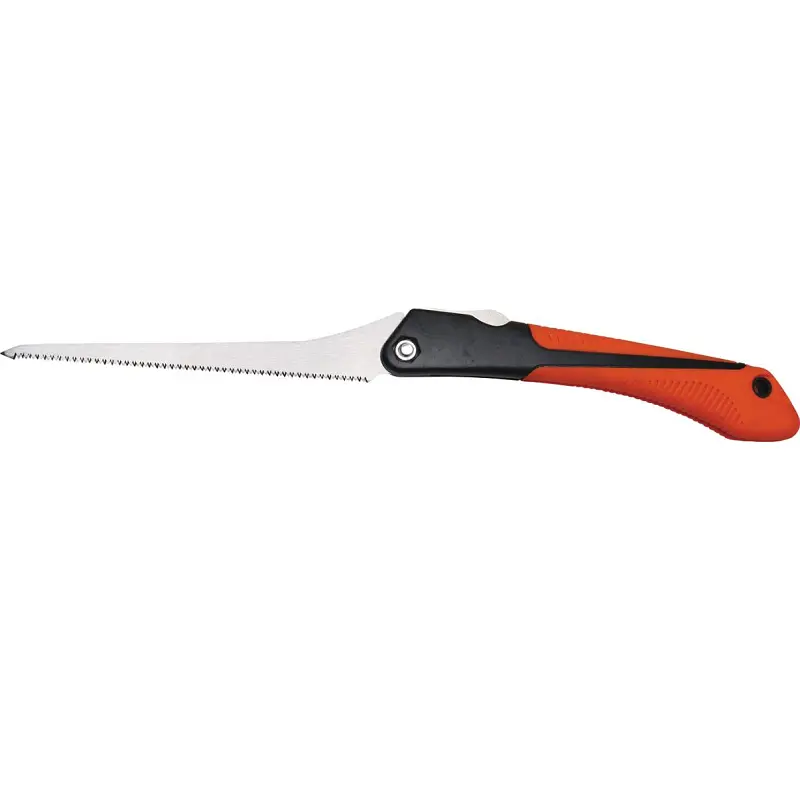
When selecting a folding saw, pay attention to the pivot. You do not want it to fold onto your knuckles while you are deep in the forest. You also want a comfortable handle. Projects take time. A comfortable grip prevents blisters. Look for a model that balances a light design with rugged construction.
What size branch can a compact camp saw actually cut?
People often underestimate small tools. They see a compact fold tool and think it is only good for tiny twigs. That is a mistake. The rule of thumb is that it can effectively cut a branch that is up to half the length of the cutting edge. So, if your folding saw has an 8-inch edge, it can easily handle a 4-inch piece.
Did you know that a high-carbon steel blade retains its edge 3 times longer than standard steel?
Of course, with good technique, you can push those limits. By cutting around the outside of a log, you can tackle thicker pieces. However, this takes more effort. If you regularly need to process 8-inch or 10-inch diameter logs, a small saw will frustrate you. In that case, you should step up to a buck saw or a larger frame model. They offer the reach needed for bigger tasks.
For typical camp chores, smaller branches are the norm. You mostly need to gather deadwood for a fire. A simple folding saw is usually plenty. It is the fastest way to get your fire going without hauling a heavy axe. It is safe, quiet, and highly effective.
Is a chain saw or a manual handsaw better for cutting firewood?
This is a classic debate. A gas or electric chain saw is undeniably powerful. It chews through massive pieces of timber in seconds. If you are processing cords of wood for the winter, you need motor power. But motors are heavy. They require fuel, oil, or batteries. They are incredibly loud and require serious safety gear. For a quick camp trip, they are usually overkill.
A manual handsaw, on the other hand, is silent and reliable. It never runs out of gas. A good folding saw or bow saw requires physical work, but it is deeply satisfying. For weekend campers, manual firewood prep is part of the fun. It warms you up on a cold morning. Plus, manual tools are incredibly light compared to power tools.
There is also a hybrid option: the pocket chainsaw. This is essentially a chain with a handle at each end. You wrap it around a branch and pull back and forth. It can be effective, but it often binds if the wood pinches. Most experienced outdoorsmen prefer a solid saw blade over a flexible style for general use. The solid metal is just more versatile and easier to control.
How do the different types of saws compare for pruning?
When it is time to prune your garden, you need a clean cut. A jagged cut damages the tree and invites disease. Different types of saws offer different benefits here. A standard hand saw might have teeth that are too coarse. A dedicated pruning saw is designed specifically for green wood. It has a curved blade that hooks into the wood, preventing it from slipping out of the cut.
Many gardeners love a folding saw for yard work. Brands like corona make excellent folding pruners. You can keep one in your pocket while you walk around the yard. When you spot a dead branch, you simply fold the tool open, make the cut, and fold it away. It is incredibly convenient. The curved edge helps pull the teeth into the wood, making the job faster and smoother.
For very high reaches, a folding tool won't reach. But for anything within arm's reach, a high-quality pruning saw is hard to beat. The teeth are incredibly sharp, and the folding mechanism keeps that sharpness protected when resting in your tool shed. Your corona or Shunkun tool will stay sharp longer if protected.
Does the length of the blade affect how fast you can cut bigger wood?
Absolutely. The length of the blade is one of the most important factors in cutting speed. A longer edge allows for a longer stroke. This means more points pass over the wood with every single push and pull. You remove more sawdust per motion, which means you finish the job much faster.
If you try to cut large pieces with a short edge, you have to use short, fast, tiring motions. It exhausts your arm quickly. A longer tool lets you use a smooth, rhythmic motion. Your body works less, but the tool does more. This is why a big frame model or a large bow saw is so effective for serious logging tasks.
However, a longer tool is harder to pack. This is the constant trade-off in gear selection. If you are backpacking, a 10-inch folding saw is a great compromise. It is long enough to handle most camp needs but short enough to fit in a backpack. If you are car camping, bring the big buck tool. Match the length to the reality of your trip.
How do you properly maintain your saw blade to ensure long life?
Even the best folding saws will fail if you treat them poorly. Maintenance is the key to longevity. After you finish cutting firewood or trimming a sappy pine tree, your saw blade will be dirty. Sap is like glue. It binds the wood dust to the metal and causes friction. You must clean the metal. Use a simple solvent or even soapy water, then dry it completely.
Rust is the enemy of any steel tool. Once the metal is clean and dry, apply a light coat of oil. You can use specialized tool oil, or even a drop of mineral oil. This prevents moisture from attacking the metal. If your tool has a fold mechanism, put a tiny drop of oil on the pivot pin too. This keeps the opening action smooth and prevents the lock from jamming.
Finally, store your tools properly. Keep them in a dry place. By taking five minutes to care for your equipment, you ensure that it will be ready and incredibly sharp the next time you head into the woods. Proper care extends the life of your blade, saving you money and hassle.
Tips for maximizing the performance of your tools:
- Keep it clean: Always wipe sap and moisture off the metal after use.
- Check the tension: For tools like the sven saw, ensure the frame is tight.
- Use the whole length: Don't just use the middle of the blade; a full stroke is more efficient.
- Respect the size limit: Don't force a small tool through a massive log.
- Store safely: Always fold your tool or use a sheath when not in active use.
Post time: 03-20-2026